evaluate(scene, t) — no wall clocks, no randomness without a seed, so scrubbing and distributed rendering come for free. reframe lint enforces it: the scene is compiled twice and any IR that differs (a Math.random() or Date baked into a prop) is flagged, so a scene that would render differently each time fails the gate before you ship it.
How edits survive regeneration
Overlays address the scene by node id, state name, and timeline label — never by position or index. When an AI regenerates a scene it follows one contract (the regeneration contract): keep those names stable for every concept that survives the redesign. When the contract is broken anyway,composeScene skips the affected edits and reports them with a diagnosis naming the likely rename. The failure hierarchy:
- Contract followed (the measured common case) → edits survive.
- Contract broken → loud orphan report.
- Never: silent edit loss, or a render failure caused by base drift.
Restructure, not just re-skin
An overlay isn’t limited to patching props and timing — it can change the structure of the cut, keyed by the same stable addresses, and those edits survive regeneration too:- Reorder a beat — patch
timeline.<beat>.order; beats move as whole units, so child labels and any edits on them ride along. - Remove a beat —
removeTimeline: ["shot-3"]splices it out by label; later steps ripple up. - Insert a whole new unit —
insertNodesadds the node tree andinsertTimeline: { into: "montage", after: "shot-2", step }splices its beat into a named parent.
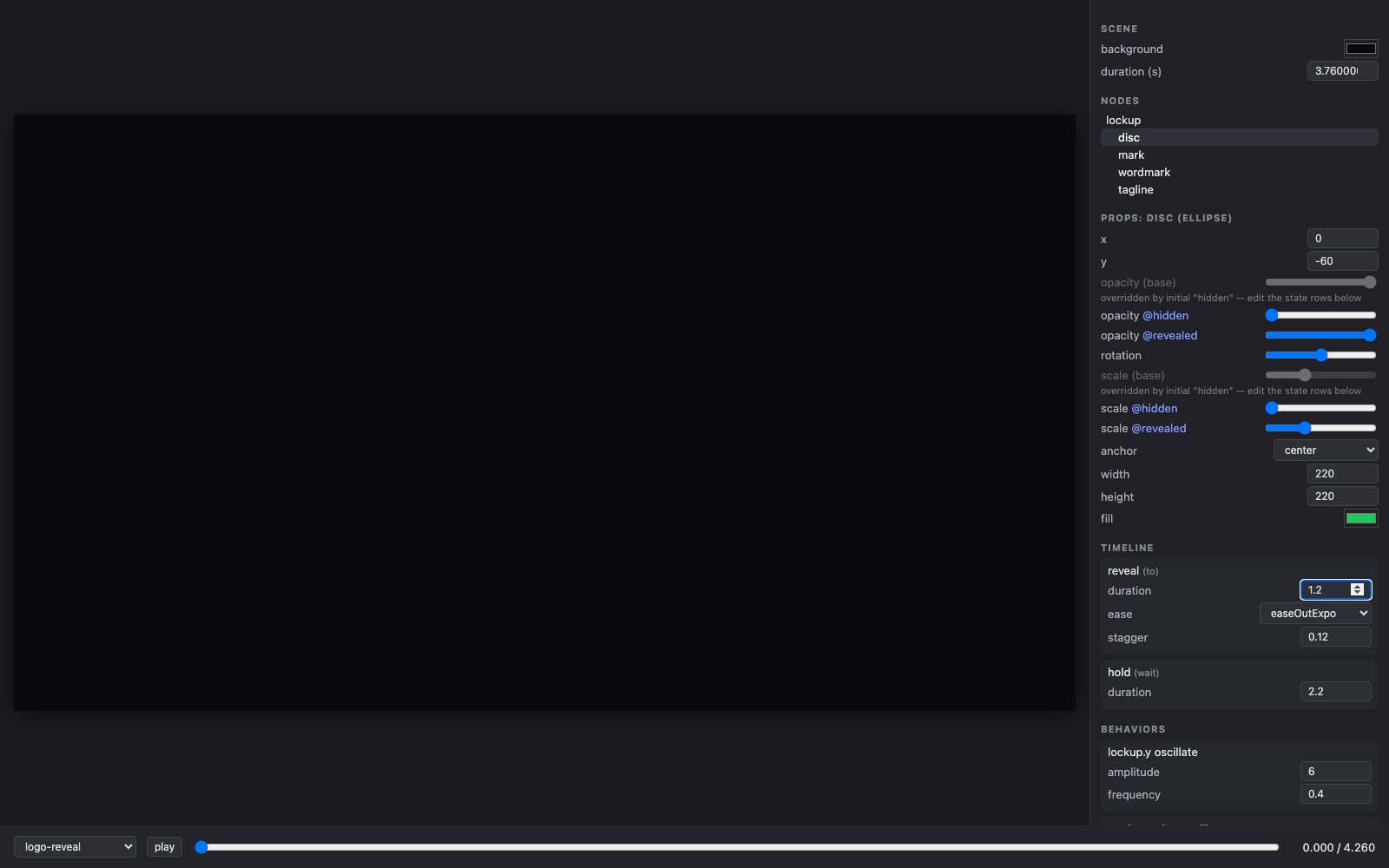
shot-${i}, so an overlay can drop, reorder, or splice in a card without touching the base. Try it on the pure-vector demo (no assets needed):
Address-keyed everything
The same stable-address namespace powers more than hand edits:- Batch: every data row is an overlay. Row keys are addresses (
nodes.name.content,timeline.enter.duration) — N personalized deterministic videos from one template, in parallel. - Sound:
audio.cuesanchor to timeline labels, so retime a step (or regenerate the scene) and the sound design moves with it. - Tooling:
reframe manifestdumps a scene’s editable surface;reframe verify-overlayproves an overlay still applies after a regen;reframe lintflags motion that has no stable address and verifies the scene is deterministic. See the CLI reference for the full command surface and the programmatic API to embed it.
Address it before you render
Because the scene is data, structure validates before any pixels — wrong props, unknown labels, off-frame addresses surface as actionable errors, and motion is computable straight from the IR. The errors are structured, not prose:reframe compile --json returns { ok: false, kind, issues: [{ code, path, message }] }, so an agent or a UI can point at the exact broken node.
See it survive
The regeneration contract — the exact rules an AI follows so edits reapply.